






Why I Switched My Browser Wallet—and Why Rabby Stuck
Whoa! I wasn’t looking to switch wallets. Really? Nope—my old extension was fine until it wasn’t. At first I thought a little lag was the culprit, but then transactions started failing in ways that felt…off. My instinct said something changed in the UX or permission model, not my behavior. Initially I thought the fix would be a quick settings tweak, but then I dug in and realized that browser-extension wallets have quietly diverged into two camps: convenience-first and security-first, and most of the mainstream options trade too much for convenience.
Okay, so check this out—Rabby caught my eye because it felt like someone built a power user wallet that still tries to be friendly. Hmm… the interface is smart without being flashy. It handles multisig, account management, and a batch of chain integrations in a way that doesn’t require a PhD. I’m biased, but the way it surfaces transaction details actually forces you to pause; which is good. On the other hand, there are tradeoffs with extension-based tooling that you should know before you click accept.
What bothered me about other extensions (and why that matters)
Here’s what bugs me about many browser wallets: they blur intent. Short confirmations, vague gas estimates, and popups that hide which account is signing. Seriously? My gut reaction the first time I saw a bundled approval request was, “Nope.” Something felt off about that UX nudging you to approve things quickly. On one hand you want speed for traders. On the other hand slowness and visibility often save you from costly mistakes or phishing losses.
Actually, wait—let me rephrase that: speed is useful, but not when it encourages poor decisions. Initially I thought that better UX meant fewer clicks and brighter colors, but then I realized positivity bias can be weaponized by malware and deceptive dApps. So I started looking for a wallet that made the right thing also the easy thing to do, not the hard thing. Rabby does a few neat things here: it shows token approvals clearly, lets you batch-reject or batch-approve with granularity, and isolates networks in ways that reduce accidental contract approvals across chains.
One small but notable detail that I appreciated (and this is very very nerdy) is the transaction preview. It breaks down calldata in readable chunks. That doesn’t mean every user will read calldata, of course. Still, giving readable context nudges behavior. My first impression was practical: if the wallet helps me think, I’m less likely to make dumb mistakes, and honestly that comfort is worth the milliseconds added to a signature flow.
Hands-on: where Rabby shines and where it trips
My testing routine is simple. I connect a fresh account, send tokens across chains, interact with a Uniswap pool, and attempt a deliberately malformed approval to see what the wallet does. Rabby’s account management made the first two tasks painless. The network switching flows were predictable. The approval UI prompted me in ways that felt intentional instead of passive.
That said, nothing is perfect. There are some rough edges. For example, sometimes notification windows stack oddly when you have a crowded browser session. Also, onboarding for complete newbies could be clearer—some jargon creeps in that will confuse casual users. I’m not 100% sure how many users will want the advanced granular controls, but power users will love them. Oh, and by the way… I saw a UI typo during one test, which is humanizing but slightly annoying.
On security, Rabby adopts a separate approach: it scopes permissions more conservatively and makes approvals reversible where the underlying protocols allow. That doesn’t mean you get bulletproof protection versus a malicious dApp, though. On one hand the wallet reduces the attack surface. On the other hand, browser extensions remain a risk compared to hardware wallets. For everyday DeFi work I now pair Rabby with a hardware key for high-value actions.
Installing Rabby without headache
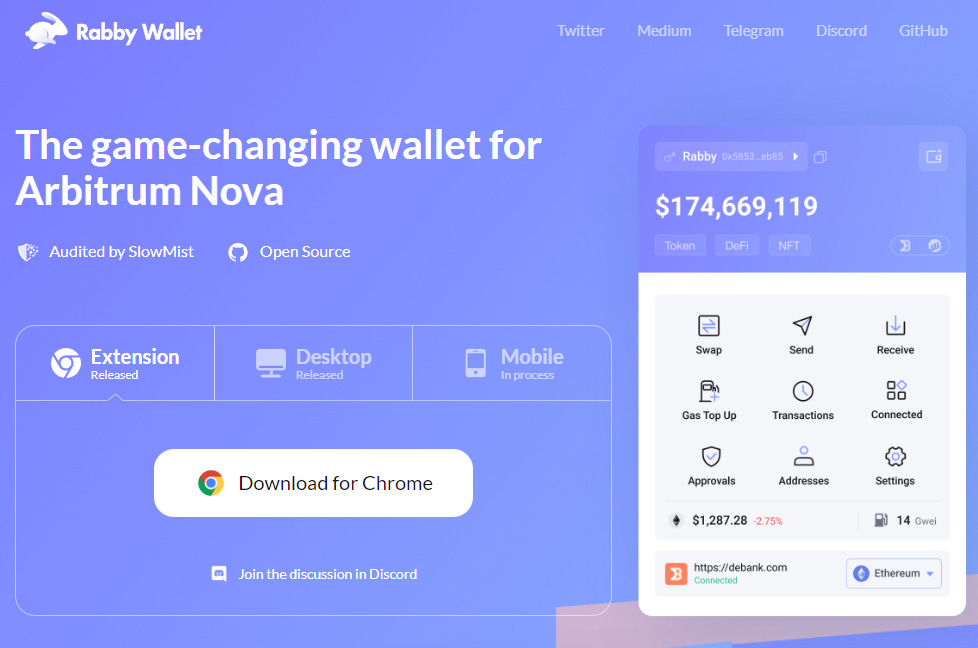
If you want to try it, I recommend starting with a clean test account and moving small amounts first. Okay, so this is practical: use a burner for a few days to learn how the wallet prompts you. When you’re ready, grab the installer from a verified source—here’s where I went for the official installer: rabby wallet download. Do not copy installers from random posts or DMs. Seriously, don’t.
Forcing yourself to test guardrails on a tiny amount reveals how the wallet surfaces approvals and how it handles chain hopping. I like that Rabby logs history in a way that’s easy to scan later, so if you ever need to audit your own actions you won’t be stuck guessing. Also, the import and account segregation tools saved me time when I split personal and trading funds.
FAQ
Is Rabby safer than other browser wallets?
Short answer: “it depends.” The architecture is designed to reduce common UX-induced mistakes and it gives more visibility into approvals than many competitors. Long answer: it’s safer in the ways that matter for UX and everyday DeFi, but it doesn’t eliminate extension risk. Use it with hardware devices for big transfers and maintain good browser hygiene.
Can I use Rabby on multiple chains?
Yes. It supports many EVM chains and provides network selectors and per-network session controls so you can keep approvals confined. That design choice helps prevent accidental cross-chain approvals, though you still need to be careful when bridging assets.
What if I’m new to DeFi?
Start small. The wallet is friendly to beginners but leans toward people who want control. If you’re brand new, follow a step-by-step guide, rename accounts clearly, and test with trivial amounts before committing larger sums. It pays to be patient—gas and approvals can be confusing at first, but the safety payoff is worth it.
In the end, I came in skeptical and walked away thoughtful. My quick, emotional reaction was: “Nice—finally a wallet that expects the user to think.” Then slow reasoning kicked back in and reminded me: browser extensions are still a middle ground between convenience and safety. On balance, Rabby nudges you toward safer choices without turning the experience into a chore. I’m still learning some of its advanced features and I’m sure there are tradeoffs I haven’t hit yet, but for my daily DeFi flow it reduced friction and gave me clearer signals. Try it cautiously, test with small amounts, and keep your high-value ops on a hardware signer—sound advice, even if it’s a little boring.









喜欢这篇内容吗?